

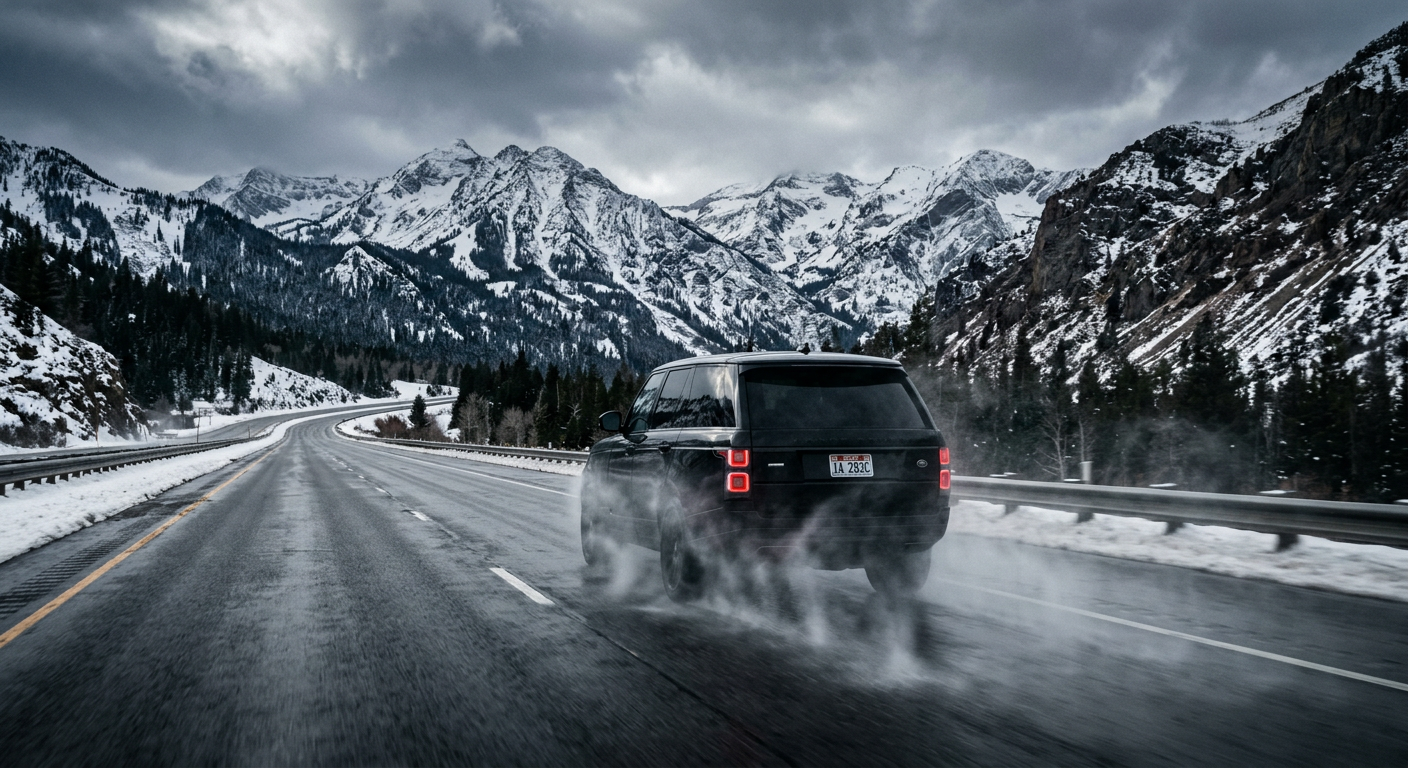
Utah winter roads throw salt, sand, and gravel that chip and wear paint, and paint protection film installed in the fall at a Salt Lake City PPF installer takes those hits so the factory paint doesn’t. This guide walks through what winter actually does to your paint, how PPF compares to other options, which package makes sense for Utah driving, and why fall is the right time to get it done.
What Utah Winter Roads Do to Your Paint
When temperatures drop, the state spreads road salt and brine across major routes to keep them drivable. That includes the freeways and interstates you use every day, plus the on-ramps and bridges that ice up first. The salt mixture does its job on the road, but it also sticks to your paint, and over time it can wear into the clear coat.
On top of the salt, sand and gravel get spread across Salt Lake City roads and the highways connecting the valley. Those loose particles get pulled up by tires and thrown against the vehicles around them. The front end takes the bulk of it, but the sides and rear get hit too.
Then there is the slush factor. Trucks and SUVs in front of you kick up a spray of salty, sandy water that coats every forward-facing panel. When that mix dries, it leaves a gritty film that baking sun and rain eventually work into the paint surface.
Where Winter Damage Hits Hardest
| Area | What Hits It | How PPF Helps |
|---|---|---|
| Front bumper | Direct gravel impact, salt spray, road sand | Film absorbs the impacts so the paint underneath stays intact |
| Hood | Flying gravel at highway speeds, salt film | Takes the chip instead of the clear coat |
| Fenders and mirrors | Side spray from passing vehicles, loose sand | Clear layer resists scuffs and grit wear |
| Rocker panels | Tire-thrown gravel, salt and slush buildup | Shields the lowest, most blasted panels on the vehicle |
| Behind the rear wheels | Grit and salt thrown by your own tires | Keeps that concentrated spray zone covered |
| Headlights | Road sand at speed, pitting from debris | Helps prevent the hazy, pitted look from winter grit |
Winter Paint Protection Options Compared
| No Protection | Wax or Sealant | Ceramic Coating | STEK PPF | |
|---|---|---|---|---|
| Stops rock chips | No | No | No | Yes |
| Helps with salt and grime | No | A little | Yes | Yes |
| Heals light scratches | No | No | No | Yes, with heat |
| Sheds slush and water | No | Some | Yes | Yes |
| How long it lasts | n/a | Weeks | Longer | Longest |
| Protects factory paint | No | Partly | Partly | Yes |
No protection. The factory clear coat is on its own. Every chip, scratch, and salt film layer goes straight onto the paint. Over a Utah winter, the forward panels can accumulate a noticeable amount of damage.
Wax or sealant. A layer of wax adds a temporary barrier that can help with water beading and makes washing easier. It wears off in weeks, especially with winter washing and road spray, and it does nothing to stop a rock chip.
Ceramic coating. A ceramic coating bonds to the paint and does a solid job shedding water and making salt and grime easier to rinse off. It lasts longer than wax. What it doesn’t do is physically stop a piece of gravel from chipping the paint underneath.
STEK PPF. Film is the only option here that physically stops rock chips. It goes on as a clear layer over the paint, and the impacts that would have chipped the clear coat hit the film instead. It also sheds water and resists grime.
Bottom line: For Utah winters, coatings help with cleaning, but only film physically stops the chips that damage paint.
Why STEK DYNOshield Holds Up in Winter
STEK describes its DYNOshield film around three features that matter for winter driving. Here is what each one means in plain terms.
Hydrophobic. The film surface is designed to repel water. That means slush and salty water bead up and run off instead of sitting on the panel and drying into a film. It makes winter rinsing easier too.
Self-healing. STEK says the top coat can recover from light scratches with heat. In practice, that means the small scuffs and swirl marks from normal winter driving and washing can fade when the film warms up, whether from the sun or a warm wash.
Anti-contamination. STEK describes the film as resisting road grime and salt film buildup. The surface is designed to be easier to clean, which matters when you are dealing with weeks of salt-covered roads between washes.
Which PPF Package Makes Sense for a Utah Winter
We offer three main packages at 4s Custom, and each one fits a different kind of Utah driver.
Partial front covers the full bumper, partial hood, partial fenders, and mirrors. This is for daily drivers who want the basics covered without going to full hood or full fenders. It catches the highest-impact area at a more approachable price.
Full front covers the full bumper, full hood, full fenders, mirrors, A-pillars, and headlights. This is for highway and canyon drivers who see more gravel and more speed. You can read more about full front coverage on our PPF page.
Full body covers all painted surfaces. This is for new high-end vehicles where you want every panel protected. If you are considering going all in, the full body PPF details explain what is included.
For winter specifically, we recommend adding rocker panel coverage to whichever package you choose. Salt and gravel blast that area hardest, and it is the panel most drivers forget about until they see the damage in the spring.
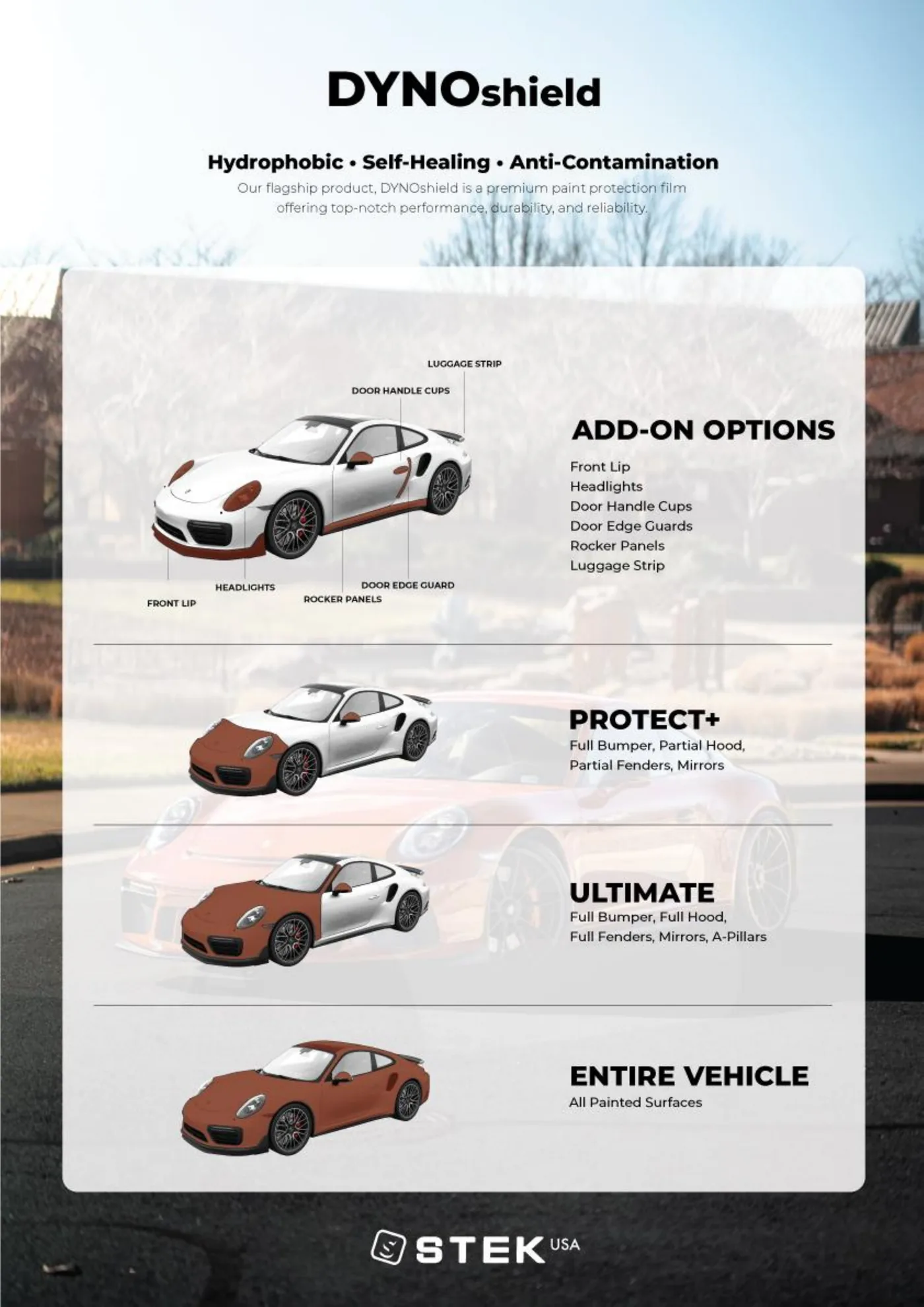
STEK’s package names: Protect+ (partial front), Ultimate (full front), Entire Vehicle (full body).
How Much Does PPF Cost in Salt Lake City?
PPF wrap pricing depends on coverage, vehicle size, and film. As a general guide for STEK DYNOshield paint protection:
- Partial front: about $1,200 to $2,000
- Full front: about $2,000 to $3,500
- Full body: about $5,000 to $8,000+
Larger vehicles, complex bumpers, and add-ons like rocker panels move the price up. A good PPF install costs more than a cheap one for a reason: premium film, clean edges, and wrapped corners are what keep the protection film from lifting or yellowing. Send us your year, make, and model and we’ll quote your exact price.
Want a new look and protection in one? Color PPF changes your vehicle’s color while protecting the factory paint underneath.
Why Fall Is the Best Time to Install PPF
The simplest reason to install in the fall is timing. You want the film on before the first storm, not after your paint has already taken a season of salt and gravel. Getting in early means the film is there from the first bad road day.
The install itself happens indoors in the shop, so the weather outside doesn’t affect the work. The film goes on in a controlled environment, and you pick up a protected vehicle ready for whatever winter throws at it.
Heading Up the Canyons This Ski Season
If you drive up Big or Little Cottonwood for skiing, you already know the canyon roads are a different animal. The gravel spread for traction in those shaded, icy stretches gets kicked up constantly, and the surface can stay gritty well after a storm clears.
Add a ski rack to the roof and you have gear, wind, and debris all working on the vehicle at once. For canyon drivers, Cottonwood Heights and the surrounding bench communities are where those trips begin, and front coverage plus rocker panels is the combination that makes the most sense for the drive.
Fall Paint Protection Checklist
- Look over the paint for existing chips before winter so you know what is already there
- Book your install before the first storm to get the film on in time
- Ask about rocker panel coverage since salt and gravel blast that area hardest
- Rinse road salt off regularly through the winter to protect both filmed and unfilmed panels
- Use a gentle wash on filmed areas and avoid high-pressure spray at the edges
Winter PPF FAQ
Can PPF be installed in the fall or winter?+
Does road salt damage PPF?+
Can I wash my car in winter after PPF is installed?+
Does PPF protect against dents?+
Is PPF worth it if I already have a ceramic coating?+
How long does a PPF install take?+
What is the difference between partial front, full front, and full body?+
How much does a full PPF usually cost?+
How much does a good PPF cost?+
What is the downside to PPF?+
Get Protected Before the First Storm
Fall is the window to get paint protection film on before Utah winter roads do their worst. Send us your vehicle details and we will get you a free quote, or give us a call and we will walk you through the right coverage for how you drive. You can also find more articles on our blog.